







Best Filling Machines: How to Choose the Right Equipment
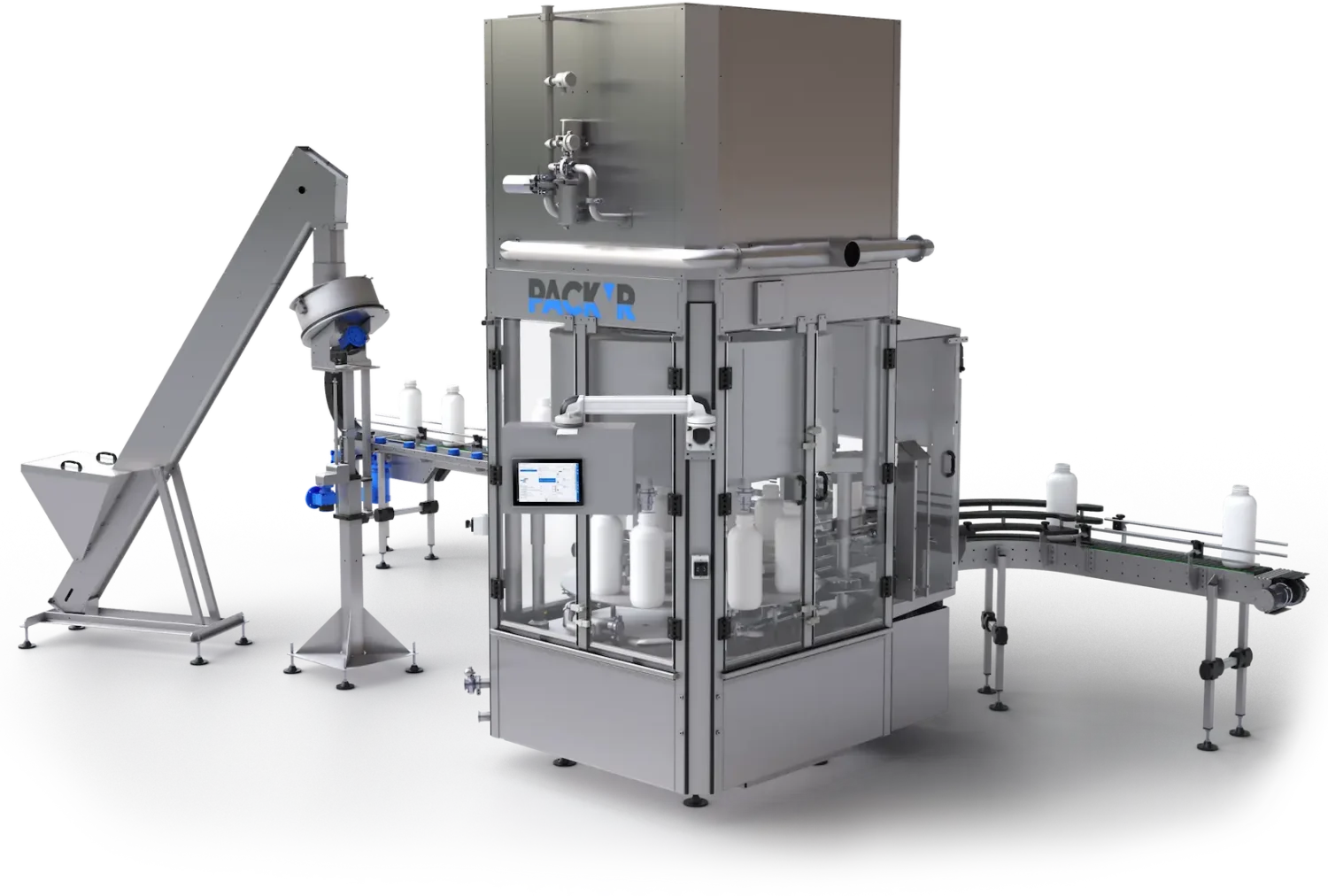
The right filling equipment for industrial production depends on the liquid being packaged, the containers used, and the required output. Choosing equipment means looking at product viscosity, filling accuracy, and how the machine will fit into daily operations. PACK'R designs standard and customized net-weight liquid filling machines for manufacturers with demanding production needs.
Understanding Different Filling Technologies
Liquid filling machines dispense measured quantities of product into containers. Different filling technologies suit different products. Gravity fillers rely on liquid flow and are commonly used for thin, free-flowing products. Overflow fillers fill containers to a uniform visible level, although the amount of liquid may vary depending on container shape.
Piston fillers measure and dispense thicker products, including sauces and creams. Net-weight fillers instead measure the weight dispensed into each container. This approach supports accurate filling and helps limit product waste. The right method also depends on foaming, particles, and other product characteristics.
Key Factors When Choosing a Filling Machine
- Start with the liquid. Its viscosity, chemical properties, and cleaning needs affect machine design and the materials that contact the product. Consider sanitation requirements as well, particularly for food applications.
- Identify the container formats and fill volumes. Bottles, jerrycans, pails, drums, and intermediate bulk containers (IBCs) each bring different handling requirements. Equipment should accommodate the containers used now and any planned changes. The shape of a container, its opening, and how it moves through the line can influence equipment selection. A machine that handles several formats may reduce the need for separate filling stations.
- Match machine capacity to production targets. Semi-automatic systems may suit lower output or operations that need operator involvement. Fully automatic equipment can support higher-volume lines. Ask about changeover times, cleaning access, and flexibility before choosing a system. Request expected operating speeds for your specific product and container rather than relying only on a machine’s maximum rated capacity.
Production Line Integration and Long-Term Performance
A filler can operate on its own or connect with cappers and other packaging equipment with conveyors. Coordinating each station helps keep containers moving through the line and reduces unnecessary interruptions.
Review the available plant space, equipment connections, and controls with the manufacturer. Also consider maintenance access, operator training, technical support, and spare parts availability. These factors affect a filling system's long-term performance. Early discussions about line layout can also reveal space limitations or handoff points that need attention before installation.
Choose the Right Liquid Filling Solution With PACK'R
Before selecting a machine, define your production requirements. Share your liquid properties, container formats, output goals, and plant layout with an experienced filling equipment engineer. Discuss installation needs, service support, and total cost of ownership alongside the purchase price.
PACK'R engineers customized net-weight filling and capping systems for applications including chemicals, coatings, and vegetable oils. Its equipment ranges from semi-automatic machines to automated lines, with ongoing maintenance and technical support available. Contact PACK'R to discuss your filling application and the equipment configuration suited to your operation.